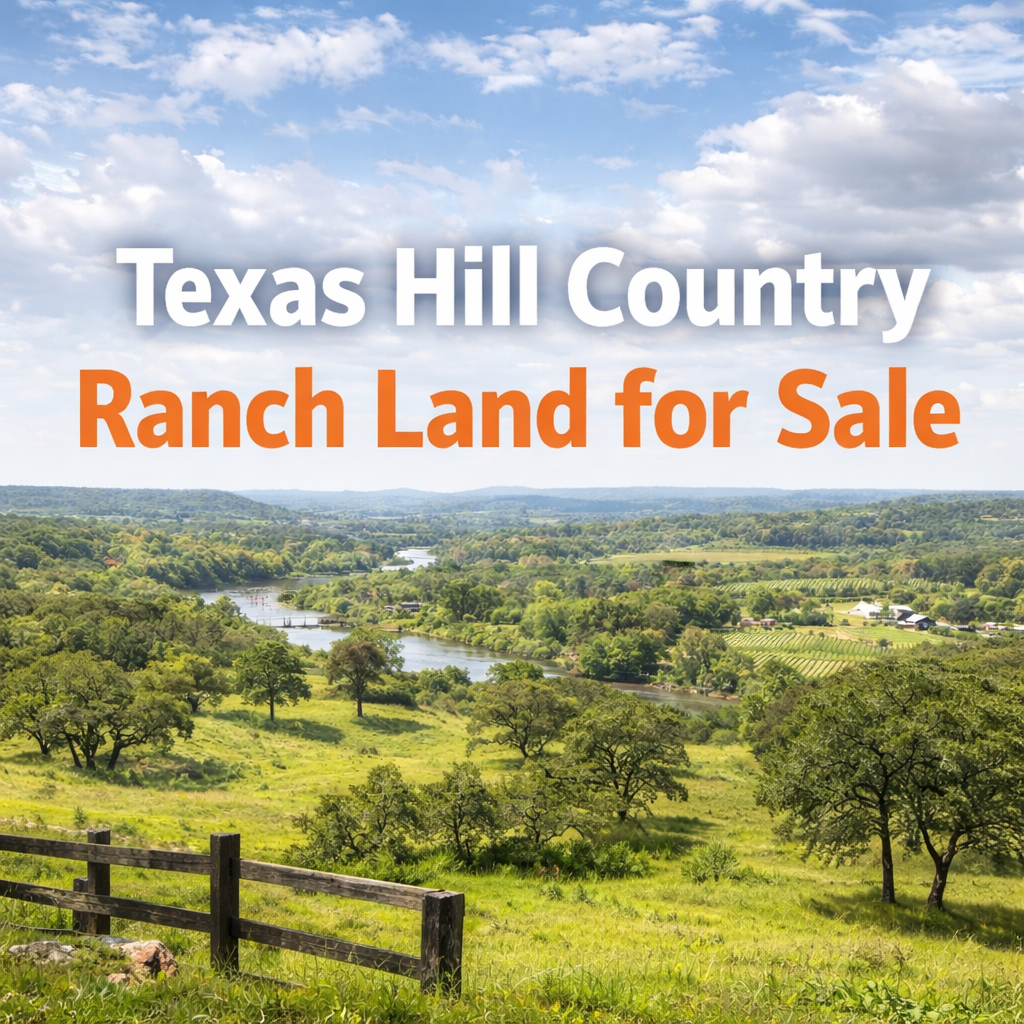
Land, Loans, Zoning, Flood Risk, and Regional Considerations
Buyers searching for Texas Hill Country ranch land for sale aren’t looking for a typical home purchase. They’re evaluating land usability, water access, county regulations, financing constraints, and long-term value in one of the most geographically diverse regions in Texas.
The Texas Hill Country stretches across dozens of counties, each with its own rules, terrain, and market dynamics. Whether you’re relocating from out of state or upgrading to acreage locally, understanding these nuances before buying ranch land in 2026 is critical.
This guide breaks down what buyers need to know—specifically for Hill Country ranch and acreage purchases. The important thing to know is that living in the Texas Hill Country is great!
What Qualifies as Ranch & Acreage Land in the Texas Hill Country
When evaluating Texas Hill Country ranch land for sale, buyers typically encounter three distinct property categories:
Lifestyle acreage (5–15 acres): Scenic views, privacy, custom home potential
Ranch-lite properties (15–50 acres): Space for livestock, wildlife exemption potential
True ranch land (50+ acres): Recreation, agricultural use, or long-term investment
In counties like Blanco County and Gillespie County, elevation, road frontage, and water availability often impact value more than total acreage. Hill Country land is rarely flat—and that matters for building, access, and drainage.
Financing Texas Hill Country Ranch Land in 2026
One of the biggest misconceptions buyers make when pursuing Texas Hill Country ranch land for sale is assuming standard residential financing will apply. In many cases, it does not.
Common Financing Scenarios
Conventional loans: Often limited to smaller acreage with residential use
Portfolio land loans: Higher down payments but greater flexibility
Construction-to-permanent loans: Popular for buyers building custom homes
USDA loans: Location-specific and frequently misunderstood
In counties like Comal County and Hays County, access to utilities, road maintenance agreements, and zoning classification directly affect loan eligibility. Financing strategy should be determined before property selection—not after.
County Zoning, Building Rules, and Land-Use Restrictions
Texas is known for limited zoning, but Hill Country counties still enforce land-use regulations that buyers must understand.
Buyers evaluating Texas Hill Country ranch land for sale should verify:
Septic system approvals and soil testing
Well permits and groundwater availability
Floodplain development restrictions
Legal ingress/egress and easements
For example:
Kerr County may require additional review for hilltop construction
Gillespie County often enforces stricter water and septic standards
County rules vary widely, and assumptions can be costly.
Flood Risk, Water, and Terrain Considerations
Hill Country geography is beautiful—and unforgiving. Many properties marketed as Texas Hill Country ranch land for sale include dry creek beds, low crossings, or proximity to rivers such as the Guadalupe River or Blanco River.
Flood risk can impact:
Build site approval
Insurance availability
Long-term resale value
Floodplain mapping and drainage evaluation should be part of every land purchase, even for properties that appear elevated or dry during showings.
Riverfront, Vineyard, and Specialty Ranch Properties
Some of the most sought-after Texas Hill Country ranch land for sale falls into specialty categories:
Riverfront Ranch Land
Premium pricing and limited supply
Increased flood insurance considerations
Seasonal access challenges
Vineyard & Wine Country Properties
Located near the Texas Hill Country AVA
Lifestyle appeal plus long-term appreciation
Agricultural use can impact tax treatment and financing
These properties attract strong out-of-state demand, particularly from buyers relocating from higher-tax states.
Investment Outlook for Texas Hill Country Ranch Land
Texas Hill Country ranch land for sale continues to perform well as a long-term investment when purchased correctly.
The market favors buyers who:
Hold land long term
Improve usability (roads, fencing, utilities)
Understand agricultural exemptions and property tax strategy
This is not a fast-flip market. Liquidity is slower than residential housing, but risk is often lower when land fundamentals are strong.
Common Buyer Mistakes to Avoid
Buyers pursuing Texas Hill Country ranch land for sale most often make these avoidable mistakes:
Assuming all acreage qualifies for conventional financing
Overlooking access or easement issues
Skipping floodplain and drainage review
Overpaying for land with limited build potential
Not understanding tax exemptions before closing
Every one of these can be addressed with proper planning and local expertise.
Final Thoughts
Buying Texas Hill Country ranch land for sale is about far more than acreage size or price per acre. It requires understanding local regulations, terrain, water access, and financing strategy.
Buyers who succeed in this market:
Ask the right questions early
Work with professionals experienced in land transactions
Structure financing before writing an offer
Done right, Hill Country ranch land can deliver lifestyle value, stability, and long-term appreciation that few other Texas markets can match.
Frequently Asked Questions About Texas Hill Country Ranch Land for Sale
What counties are best for Texas Hill Country ranch land for sale?
Popular counties include Comal, Blanco, Gillespie, Kerr, and Hays counties. Each offers different terrain, water availability, zoning rules, and price points depending on proximity to Austin or San Antonio.
Do I need flood insurance when buying ranch land in the Texas Hill Country?
Flood insurance is typically required if any structure is located within a FEMA-designated floodplain. Even if not required, many buyers choose coverage due to the Hill Country’s flash-flood risk, especially near rivers and low crossings.
What are typical well water regulations in Gillespie County?
Gillespie County often requires permits for new wells and may impose spacing requirements. Buyers should confirm groundwater availability and restrictions through the local groundwater conservation district before purchasing land.
Can I use a USDA loan to buy Texas Hill Country ranch land?
USDA loans may be available in certain rural areas, but eligibility depends on location, property use, and buyer income limits. Many ranch properties exceed USDA acreage or use guidelines.
How much down payment is required for ranch land in the Hill Country?
Down payments typically range from 20% to 40% for land-only or ranch properties, depending on acreage, usability, and loan type. Improved properties with homes may qualify for lower down payments.
Are agricultural exemptions transferable when buying ranch land?
No. Agricultural exemptions must be re-applied for after purchase. Buyers should confirm prior use history and eligibility to avoid unexpected property tax increases.
Is Texas Hill Country ranch land a good long-term investment?
Yes, when purchased with proper due diligence. Long-term holders who improve land usability and understand tax strategy tend to see strong appreciation and lower volatility than residential markets.
Ready to Evaluate Texas Hill Country Ranch Land—Before You Buy?
Buying Texas Hill Country ranch land for sale is very different from buying a home in a subdivision. Financing, zoning, water access, flood risk, and county regulations can make or break a deal before you ever close.
If you’re considering acreage, ranch land, or a future build anywhere in the Texas Hill Country, the smartest next step is a strategy-first conversation—not guessing based on listings.
👉 Get a personalized ranch land financing and feasibility review
We’ll walk through:
Loan options based on acreage and intended use
County-specific zoning and build considerations
Floodplain, water, and access red flags
A clear “buy / don’t buy / adjust strategy” recommendation
📍 Serving buyers across Comal, Blanco, Gillespie, Kerr, and Hays Counties
📞 Schedule a consultation before you write an offer
