Struggling With the Payment?
A Temporary Rate Buydown
Can Get You Into the Home Today
Discover how a seller-paid 2-1 buydown slashes your mortgage payment in year one — and why smart Texas buyers are using this strategy right now.
If you've been watching mortgage rates and telling yourself "I'll buy when rates come down," there's a strategy that lets you stop waiting — and start living in your home — while keeping your payment manageable from day one. It's called a temporary rate buydown, and in Central Texas right now, motivated sellers are paying for it.
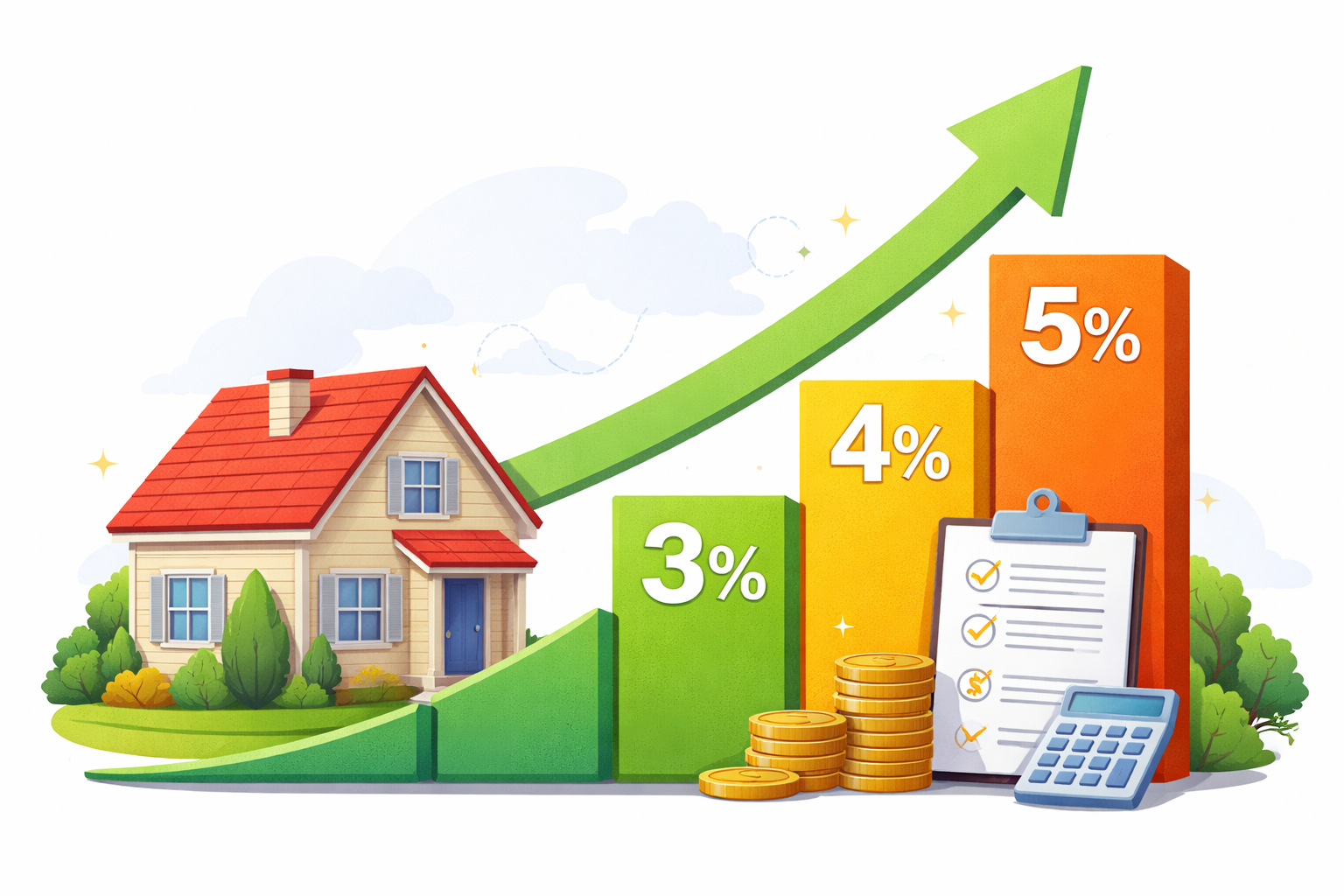
After 33 years in the mortgage business across New England and Texas, I've watched buyers sit on the sidelines through multiple rate cycles. The ones who come out ahead almost always find a way to make the current market work for them — not the market they're waiting for. In today's environment, the temporary rate buydown is one of the most powerful affordability tools I've seen in years, and far too few buyers know it exists.
This post explains exactly how a temporary rate buydown works, walks through real payment numbers, and shows you how to negotiate one into your next Texas home purchase. There's also a link to my free mortgage buydown calculator so you can run your own numbers in under a minute.
What Is a Temporary Rate Buydown — and How Does It Work?
A temporary rate buydown is a financing arrangement where a lump sum of money — most often paid by the seller or homebuilder — is deposited into an escrow account at closing. That money is then used to subsidize your monthly mortgage payment for the first one, two, or three years of your loan, effectively giving you a lower interest rate during the buydown period.
After the buydown period ends, your rate simply returns to the original note rate you locked. The loan itself never changes — only how your payment is structured in those early years. The Consumer Financial Protection Bureau recognizes buydowns as a legitimate financing tool that reduces a borrower's monthly payment during the initial loan period.
A temporary rate buydown does not change your actual loan rate. It uses prepaid seller funds to cover part of your payment in years one and two, making those payments significantly lower — giving you time for income growth, refinancing, or simply settling in without payment shock.
The 3 Main Types of Temporary Buydowns
There are three common temporary buydown structures. The 2-1 buydown is by far the most popular right now:
- 3-2-1 Buydown: Rate is 3% lower in year one, 2% lower in year two, 1% lower in year three, then full rate from year four.
- 2-1 Buydown: Rate is 2% lower in year one, 1% lower in year two, full rate from year three onward.
- 1-0 Buydown: Rate is 1% lower in year one only, then full rate from year two.
For most Texas buyers in 2025, the 2-1 buydown mortgage hits the sweet spot — meaningful first-year savings, a reasonable cost to the seller, and a two-year on-ramp before the full payment kicks in.
Real Numbers: How Much Can a 2-1 Buydown Save You?
Let's look at a concrete example. Suppose you're buying a home in New Braunfels, Schertz, or San Marcos at a purchase price of $400,000 with 5% down ($20,000). Your loan amount is $380,000. Your lender locks a rate of 6.875% on a 30-year fixed mortgage.
Without a buydown, your principal and interest payment is approximately $2,495/month. Here's what a 2-1 buydown does to that number:
| Year | Effective Rate | P&I Payment | Full-Rate Payment | Monthly Savings |
|---|---|---|---|---|
| Year 1 | 4.875% | $2,011 | $2,495 | $484 / mo |
| Year 2 | 5.875% | $2,248 | $2,495 | $247 / mo |
| Year 3+ | 6.875% | $2,495 | $2,495 | — |
| Total first-year savings (12 months × $484) | $5,808 | |||
| Total two-year savings combined | $8,772 | |||
Example based on $380,000 loan at 6.875% note rate, 30-year fixed. Payment shown is principal & interest only; taxes, insurance, and HOA not included. For illustration purposes only — your rate and payment will vary.
Nearly $8,800 in payment relief over two years — funded by the seller. That's money that can pay your moving costs, build your emergency fund, or simply provide breathing room while you get settled.
Want to run your own numbers? Use the free HomeQualify.ai Mortgage Buydown Calculator to see exact payment scenarios for any loan amount, rate, and buydown structure.
See Your Exact Savings in 60 Seconds
Plug in your loan amount and rate. The calculator shows your year-by-year payment breakdown and total buydown cost — free, instant, no email required.
Open the Buydown Calculator →Who Pays for the Buydown — and Can You Really Negotiate It?
Here's the part buyers love: in most cases, you don't pay for the buydown yourself. The cost is typically funded by the seller as a closing cost concession — and in today's Central Texas market, that conversation is very much on the table.
Why Sellers in Texas Are Saying Yes
In markets like New Braunfels, Kyle, Buda, and the San Antonio suburbs, homes are sitting on the market longer than they were during the 2020–2022 frenzy. Sellers who want to move quickly have two choices: drop the price, or offer a concession. A seller-paid buydown is often more appealing to a seller than a direct price reduction, because the list price stays intact — but the buyer gets meaningful monthly payment relief.
For homebuilders specifically, a seller-paid buydown in Texas has become a standard incentive. KB Home, Perry Homes, David Weekley — most major builders in the Hill Country and I-35 corridor have used 2-1 buydowns as a sales tool at various times. If you're buying new construction, always ask whether a buydown is available or can be negotiated in lieu of other incentives.
How Much Does the Buydown Cost the Seller?
Using our example above ($380,000 loan, 6.875% rate, 2-1 structure), the total cost the seller deposits into escrow is approximately $8,772 — the sum of all payment subsidies over the two-year period. On a $400,000 purchase, that's about 2.2% of the purchase price, which is well within conventional concession limits in Texas.
How to Lower Your Mortgage Payment in Year One: Step-by-Step
Getting a temporary rate buydown into your purchase is straightforward when you know the steps. Here's how it works from start to finish:
- Get Pre-Approved First
Your pre-approval establishes your loan amount and the rate you'll lock. This is the foundation of the buydown calculation — and it shows sellers you're a serious buyer.
- Run the Buydown Numbers Before You Negotiate
Use the buydown calculator to know the exact seller concession amount you'll ask for. Walking in with precise numbers gives you credibility and makes the offer cleaner.
- Write the Buydown Into Your Offer as a Seller Concession
Your real estate agent will include the seller-paid buydown as a concession line item in the purchase contract. The dollar amount corresponds to the escrow cost calculated in step two.
- Lock Your Rate and Complete Underwriting
Once the contract is accepted, your lender — that's me — sets up the buydown escrow account alongside your standard loan package. The process is no more complicated than a regular mortgage from a documentation standpoint.
- Close and Enjoy Your Lower Payment
At closing, the seller's concession funds the escrow account. Starting with your very first payment, you pay the reduced buydown-period rate. Your first-year payment could be hundreds of dollars below what you expected — without any adjustment to your note rate or loan balance.
Is a 2-1 Buydown Mortgage Right for You? Pros and Cons
A temporary buydown is an excellent tool — but like any mortgage strategy, it fits some buyers better than others. Here's an honest look at both sides:
Advantages
- Dramatically lowers your payment in year one
- Typically seller-funded — no out-of-pocket cost to you
- Buys time before the full payment kicks in
- If you refinance in years 1–2, unused escrow funds are returned to you
- Can help you qualify on tighter income scenarios
- Works on conventional, FHA, and VA loans
Considerations
- Full note rate applies from year three — plan for the payment increase
- Does not reduce your loan balance or note rate permanently
- Seller may counter with a lower concession in strong markets
- Rate adjusts even if market rates rise further in year three
The ideal candidate for a 2-1 buydown is a buyer who can comfortably make the full payment at the note rate — but welcomes the breathing room in years one and two. It's not a strategy for buyers who can only afford the buydown payment; you should underwrite yourself at the full note rate and treat the savings as a bonus. Conventional loans using this structure follow Fannie Mae guidelines on seller concession limits and buydown escrow account requirements.
Texas Home Affordability in 2025: Why This Strategy Matters Right Now
Central Texas remains one of the most in-demand relocation destinations in the country. New Braunfels, San Marcos, Seguin, and the entire I-35 corridor from San Antonio to Austin continue to attract buyers from across the U.S. — even as elevated mortgage rates have created sticker shock for many households. According to the Texas A&M Real Estate Center, Central Texas remains one of the fastest-growing housing markets in the nation, keeping affordability pressure elevated heading into 2025.
The result is a market where Texas home affordability in 2025 is a genuine concern — but also a market where sellers and builders have real incentive to help buyers across the finish line. That makes the current environment unusually favorable for negotiating a seller-paid buydown. Buyers who understand this tool have a meaningful advantage over those who are simply waiting for rates to fall organically.
And here's the scenario many Texas buyers are planning for: if rates drop meaningfully — say to the mid-5s or below — you refinance, capture the lower permanent rate, and walk away with any unused buydown escrow funds returned at closing. You've essentially been paid to own the house during the waiting period.
In Comal, Guadalupe, Bexar, and Hays counties — the core Central Texas/Hill Country market — motivated sellers and builders are actively offering concessions. If you're pre-approved and ready to move, negotiating a seller-paid 2-1 buydown may cost you nothing and save you thousands in year one.
Frequently Asked Questions About Temporary Rate Buydowns
What is a temporary rate buydown?
A temporary rate buydown is a financing arrangement where the interest rate on your mortgage is reduced below the note rate for the first one to three years of the loan. The most common structure is the 2-1 buydown — 2% below rate in year one, 1% below in year two, then the full rate from year three. The cost is typically funded by the seller or builder as a concession at closing.
Who pays for a seller-paid buydown in Texas?
In most Texas purchase transactions, the seller or homebuilder funds the buydown by depositing the required amount into an escrow account at closing. The buyer negotiates this as a closing cost concession in the purchase contract. In some cases, buyers with extra available funds may self-fund a buydown, though seller-paid is far more common.
Is a 2-1 buydown mortgage available on FHA and VA loans?
Yes — 2-1 buydowns are available on conventional, FHA, and VA loans. The specific guidelines and concession limits vary by loan type, so it's important to work with a lender experienced in all three. As a VA-approved lender licensed in Texas, I structure buydowns on all loan types regularly.
What happens to unused buydown funds if I refinance?
If you refinance before the buydown period ends, any remaining escrowed funds are returned to you at closing as a credit. This is one of the reasons a 2-1 buydown is particularly appealing if you anticipate refinancing in the next few years — you're essentially keeping the savings either way.
How do I calculate the cost of a temporary rate buydown?
The buydown cost equals the total payment difference between the buydown rate and the note rate across the entire subsidy period. Use the free HomeQualify.ai Mortgage Buydown Calculator to generate an exact cost breakdown for any loan amount, rate, and buydown structure in seconds.
Ready to Lower Your Mortgage Payment in Year One?
If you're a Texas buyer feeling priced out by today's payment levels, a temporary rate buydown deserves a serious look. Start by running your numbers — the calculator takes less than a minute and requires no login or personal information.
When you're ready to take the next step, reach out directly. I'll review your specific scenario, confirm whether a seller-paid buydown makes sense for your purchase, and get you a pre-approval that positions you to negotiate this concession confidently.
Calculate Your Buydown Savings — Free
See your year-by-year payment under a 1-0, 2-1, or 3-2-1 buydown structure. Instant results, no form to fill out.
Open Buydown Calculator →