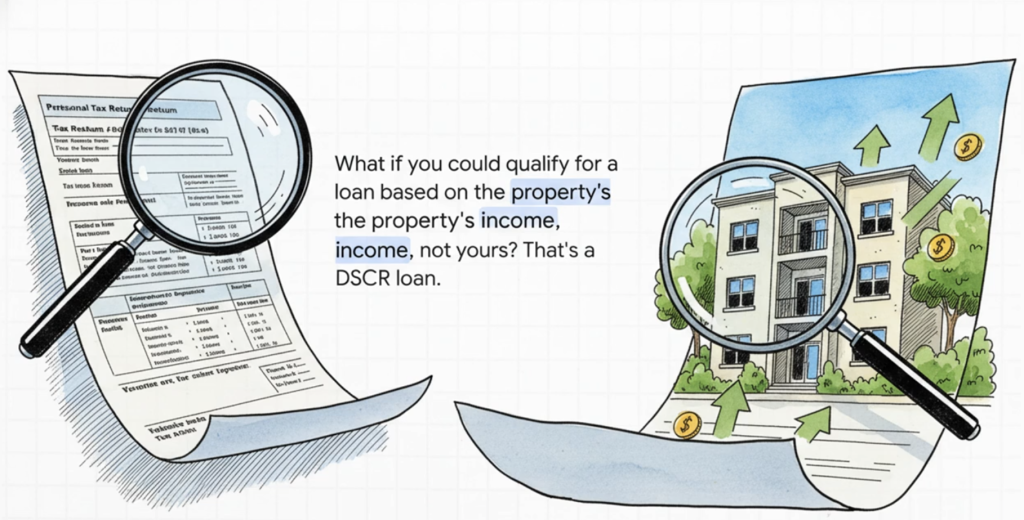
Are you a real estate investor struggling to qualify for traditional mortgages despite having profitable rental properties? DSCR loans (Debt Service Coverage Ratio loans) offer a solution by qualifying you based on your property’s rental income instead of your personal income.
I’m Steve Tomaselli, Mortgage Loan Originator (NMLS 358920) with Edge Home Finance (NMLS 891464). I’ve helped hundreds of real estate investors secure DSCR financing to grow their portfolios. In this comprehensive guide, I’ll explain everything you need to know about DSCR mortgages. If you are more of a visual learner, you can navigate to my video about DSCR mortgages over on YouTube.
What Is a DSCR Loan?
A DSCR loan is an investment property mortgage that qualifies borrowers based on the rental income of the property rather than the borrower’s personal income, tax returns, or employment history. DSCR stands for Debt Service Coverage Ratio, which measures whether a property generates enough rental income to cover its mortgage payment and related expenses.
How DSCR Loans Differ from Traditional Mortgages
Traditional mortgages require extensive income documentation including tax returns, W-2s, pay stubs, and employment verification. DSCR loans eliminate this requirement by focusing solely on the property’s ability to generate cash flow.
This fundamental difference makes DSCR loans ideal for self-employed borrowers, investors with multiple properties, and anyone whose tax returns don’t reflect their true earning capacity due to business write-offs and depreciation.
How to Calculate DSCR: The Formula Explained
The Debt Service Coverage Ratio is calculated using this simple formula:
DSCR = Monthly Rental Income ÷ Total Monthly Debt Obligations
Monthly debt obligations include:
- Principal and interest mortgage payment
- Property taxes
- Homeowners insurance
- HOA fees (if applicable)
- Mortgage insurance (if required)
DSCR Calculation Example
Let’s say you’re purchasing a rental property with these numbers:
- Monthly rental income: $3,000
- Monthly mortgage payment (PITI): $2,400
DSCR = $3,000 ÷ $2,400 = 1.25
A DSCR of 1.25 means the property generates 25% more income than needed to cover its expenses, which most lenders consider excellent.
What Is a Good DSCR Ratio?
- DSCR of 1.25 or higher: Excellent, best rates and terms
- DSCR of 1.0 to 1.24: Good, property breaks even or has modest positive cash flow
- DSCR of 0.75 to 0.99: Acceptable with some lenders, higher rates apply
- DSCR below 0.75: Difficult to qualify, limited lender options
Ready to calculate your property’s DSCR and explore financing options? Visit homequalify.ai to get started with a free consultation.
Who Should Consider a DSCR Loan?
Self-Employed Real Estate Investors
If you’re self-employed and maximize tax deductions, your tax returns may show minimal income even though your business is thriving. DSCR loans solve this problem by ignoring your tax returns entirely.
Investors with Multiple Properties
Traditional lenders often limit the number of financed properties you can own (typically 4-10). DSCR lenders generally have no such limits, allowing unlimited portfolio growth.
Foreign National Investors
International investors without U.S. tax returns or Social Security numbers can qualify for DSCR loans using their foreign credit history and documentation.
New LLCs and Business Entities
If you purchase investment properties through an LLC that doesn’t have two years of tax history, DSCR loans provide a viable financing path.
Investors Seeking Speed and Simplicity
With minimal documentation requirements, DSCR loans typically close faster than conventional mortgages—often in 30 days or less.
DSCR Loan Requirements: What You Need to Qualify
Credit Score Requirements
Most DSCR lenders require a minimum credit score of 640, though some programs accept scores as low as 620. Higher credit scores (720+) unlock better interest rates and terms.
Down Payment for DSCR Loans
Expect to make a down payment of 20-25% for most DSCR loans. Some lenders offer programs with as little as 15% down for properties with strong DSCR ratios (1.25 or higher).
Property Type Restrictions
DSCR loans are available for:
- Single-family homes
- 2-4 unit multifamily properties
- Condos and townhomes
- Single-family rental portfolios
Primary residences and properties without rental income do not qualify.
Cash Reserves
Lenders typically require 6-12 months of mortgage payment reserves (PITIA) in savings or liquid assets per property being financed.
Appraisal Requirements
A full appraisal is required, and the lender will use market rent analysis to determine the property’s rental income potential, even if the property is currently vacant.
DSCR Loan Benefits: Why Investors Choose This Option
No Tax Returns Required
This is the primary advantage. You don’t need to provide personal or business tax returns, eliminating concerns about low reported income.
No Income Verification or Employment Documentation
No pay stubs, no W-2s, no employment verification calls, and no explanation letters for income gaps or job changes.
Faster Closing Process
With less documentation to review, underwriting moves quickly. Many DSCR loans close in 21-30 days.
No Limit on Number of Properties
Unlike conventional financing (Fannie Mae/Freddie Mac) which caps financed properties at 10, most DSCR lenders have no limit.
Cash-Out Refinancing Available
You can refinance existing investment properties and pull out equity without income verification, perfect for funding additional investments.
Interest-Only Payment Options
Some DSCR programs offer interest-only payments for 5-10 years, maximizing cash flow for investors.
Want to explore how DSCR financing can accelerate your investment strategy? Connect with me at homequalify.ai for personalized guidance.
DSCR Loan Rates and Costs
Interest Rates
DSCR loan interest rates are typically 0.5% to 1.5% higher than conventional mortgage rates due to the increased flexibility and reduced documentation. As of 2025, DSCR rates generally range from 7% to 9%, depending on:
- Your credit score
- The property’s DSCR ratio
- Loan-to-value (LTV) ratio
- Property type and location
Closing Costs
Closing costs for DSCR loans are similar to conventional mortgages, typically 2-5% of the loan amount, including:
- Origination fees
- Appraisal fees
- Title insurance
- Recording fees
- Prepaid taxes and insurance
Prepayment Penalties
Some DSCR loans include prepayment penalties if you pay off the loan early (typically 1-3 years). Always review your loan terms carefully or ask me to explain them.
DSCR Loans vs. Other Investment Property Financing Options
DSCR Loans vs. Conventional Investment Property Loans
Conventional loans require full income documentation, limit you to 10 financed properties, and often have stricter debt-to-income requirements. However, they typically offer lower interest rates.
DSCR loans require no income documentation, have no property limits, and qualify based on rental income. They’re more flexible but come with slightly higher rates.
DSCR Loans vs. Hard Money Loans
Hard money loans are short-term (6-24 months), have very high interest rates (10-15%+), and are used primarily for fix-and-flip projects.
DSCR loans are long-term mortgages (15-30 years) with much lower rates, ideal for buy-and-hold investors seeking permanent financing.
DSCR Loans vs. Bank Statement Loans
Bank statement loans verify income using 12-24 months of personal or business bank statements instead of tax returns.
DSCR loans don’t require any income verification at all, making them simpler and often easier to qualify for.
Common DSCR Loan Myths Debunked
Myth #1: You Need Perfect Credit
While good credit helps, many DSCR programs accept credit scores as low as 640, and some go even lower for strong properties.
Myth #2: DSCR Loans Are Only for Experienced Investors
First-time investors can qualify for DSCR loans. You don’t need previous landlord experience.
Myth #3: You Can’t Get a DSCR Loan with Low or Negative DSCR
Some lenders offer DSCR loans with ratios as low as 0.75, though you’ll need a larger down payment and accept higher rates.
Myth #4: DSCR Loans Always Have High Interest Rates
While rates are slightly higher than conventional loans, they’re significantly lower than hard money or other alternative financing options.
How to Apply for a DSCR Loan: Step-by-Step Process
Step 1: Property Analysis
Identify a property and determine its market rent using comparable rentals in the area. This establishes your potential DSCR.
Step 2: Pre-Qualification
Contact a DSCR loan specialist (like me!) to review your credit, down payment, and reserves to determine eligibility.
Step 3: Property Under Contract
Make an offer and get the property under contract. DSCR lenders typically allow longer inspection periods than conventional financing.
Step 4: Formal Loan Application
Complete the loan application, providing identification, credit authorization, and bank statements showing reserves.
Step 5: Appraisal and Underwriting
The lender orders an appraisal with a rent schedule. Underwriting reviews the file, which typically takes 7-14 days.
Step 6: Clear to Close
Once approved, you’ll receive final loan documents. Review and sign, then prepare for closing.
Step 7: Closing and Funding
Close on the property and receive the keys to your new investment.
Maximizing Your Success with DSCR Financing
Choose Properties with Strong Cash Flow
Target properties with DSCR ratios of 1.2 or higher to secure the best rates and terms.
Maintain Strong Credit
Keep your credit score above 700 to access the most competitive DSCR loan programs.
Build Adequate Reserves
Having 12+ months of reserves demonstrates financial stability and can help you negotiate better terms.
Work with an Experienced DSCR Lender
Not all lenders offer DSCR programs. Partner with a loan originator who specializes in investment property financing and understands the nuances of DSCR underwriting.
Consider Multiple Properties Simultaneously
Some investors purchase 2-3 properties at once using DSCR financing, accelerating portfolio growth significantly.
Is a DSCR Loan Right for Your Investment Strategy?
DSCR loans are ideal if you:
- Are self-employed with significant tax write-offs
- Own or plan to own multiple investment properties
- Want to avoid the hassle of income documentation
- Have good credit and sufficient cash reserves
- Focus on cash-flowing rental properties
- Need to close quickly on investment opportunities
DSCR loans may not be the best fit if you:
- Qualify for conventional financing with better rates
- Are purchasing a primary residence
- Have limited cash reserves or down payment
- Are looking for the absolute lowest interest rate
Let’s determine if DSCR financing aligns with your investment goals. Schedule a consultation at homequalify.ai today.
Frequently Asked Questions About DSCR Loans
Can I use a DSCR loan for a primary residence?
No, DSCR loans are exclusively for investment properties that generate rental income.
Do I need to show tax returns for a DSCR loan?
No, DSCR loans require no personal or business tax returns.
What documentation do I need for a DSCR loan?
You’ll need identification, credit authorization, proof of down payment funds, and bank statements showing reserves.
Can I get a DSCR loan with bad credit?
Most programs require a minimum 640 credit score, though some lenders go lower for exceptional properties or larger down payments.
How long does DSCR loan approval take?
Most DSCR loans close in 21-30 days, faster than conventional mortgages.
Can I use DSCR financing for fix-and-flip properties?
DSCR loans are designed for long-term rental properties. Fix-and-flip investors typically use hard money or renovation loans.
Are DSCR loan rates fixed or adjustable?
Both options are available. Most investors choose fixed-rate DSCR loans for long-term stability.
Can I refinance my current rental property with a DSCR loan?
Yes, DSCR cash-out refinancing is available and popular among investors looking to access equity.
Take the Next Step in Growing Your Real Estate Portfolio
DSCR loans have revolutionized investment property financing by removing the income verification barriers that held back so many qualified investors. Whether you’re acquiring your first rental property or your fiftieth, DSCR financing offers the flexibility and simplicity you need to scale efficiently.
As a mortgage loan originator specializing in investment property financing, I’ve seen firsthand how DSCR loans can transform an investor’s ability to build wealth through real estate. The key is understanding how to structure deals properly, choose the right properties, and work with lenders who truly understand investor needs.
If you’re ready to explore DSCR financing options or have questions about whether this loan type is right for your situation, I’m here to help. With access to multiple DSCR lenders and programs, I can compare options and find the best fit for your specific investment strategy.
Ready to move forward? Visit homequalify.ai to connect with me directly. Let’s discuss your investment goals and create a financing strategy that works for you.

One Response